> For the complete documentation index, see [llms.txt](https://leetcode-solution-leetcode-pp.gitbook.io/leetcode-solution/llms.txt). Markdown versions of documentation pages are available by appending `.md` to page URLs; this page is available as [Markdown](https://leetcode-solution-leetcode-pp.gitbook.io/leetcode-solution/medium/56.merge-intervals.md).
# 0056. 合并区间
### 题目地址(56. 合并区间)
### 题目描述
```
给出一个区间的集合,请合并所有重叠的区间。
示例 1:
输入: intervals = [[1,3],[2,6],[8,10],[15,18]]
输出: [[1,6],[8,10],[15,18]]
解释: 区间 [1,3] 和 [2,6] 重叠, 将它们合并为 [1,6].
示例 2:
输入: intervals = [[1,4],[4,5]]
输出: [[1,5]]
解释: 区间 [1,4] 和 [4,5] 可被视为重叠区间。
注意:输入类型已于2019年4月15日更改。 请重置默认代码定义以获取新方法签名。
提示:
intervals[i][0] <= intervals[i][1]
```
### 前置知识
* 排序
### 公司
* 阿里
* 腾讯
* 百度
* 字节
### 思路
* 先对数组进行排序,排序的依据就是每一项的第一个元素的大小。
* 然后我们对数组进行遍历,遍历的时候两两运算(具体运算逻辑见下)
* 判断是否相交,如果不相交,则跳过
* 如果相交,则合并两项
### 关键点解析
* 对数组进行排序简化操作
* 如果不排序,需要借助一些 hack,这里不介绍了
### 代码
* 语言支持: Javascript,Python3
```js
/*
* @lc app=leetcode id=56 lang=javascript
*
* [56] Merge Intervals
*/
/**
* @param {number[][]} intervals
* @return {number[][]}
*/
function intersected(a, b) {
if (a[0] > b[1] || a[1] < b[0]) return false;
return true;
}
function mergeTwo(a, b) {
return [Math.min(a[0], b[0]), Math.max(a[1], b[1])];
}
var merge = function (intervals) {
// 这种算法需要先排序
intervals.sort((a, b) => a[0] - b[0]);
for (let i = 0; i < intervals.length - 1; i++) {
const cur = intervals[i];
const next = intervals[i + 1];
if (intersected(cur, next)) {
intervals[i] = undefined;
intervals[i + 1] = mergeTwo(cur, next);
}
}
return intervals.filter((q) => q);
};
```
Python3 Code:
```
class Solution:
def merge(self, intervals: List[List[int]]) -> List[List[int]]:
"""先排序,后合并"""
if len(intervals) <= 1:
return intervals
# 排序
def get_first(a_list):
return a_list[0]
intervals.sort(key=get_first)
# 合并
res = [intervals[0]]
for i in range(1, len(intervals)):
if intervals[i][0] <= res[-1][1]:
res[-1] = [res[-1][0], max(res[-1][1], intervals[i][1])]
else:
res.append(intervals[i])
return res
```
***复杂度分析***
令 n 为 intervals 的长度。
* 时间复杂度:由于采用了排序,因此复杂度大概为 $O(nlogn)$
* 空间复杂度:$O(n)$
### 扩展
这道题是让你合并区间。这里还有一道删除区间的题目,大家可以结合起来练习 [Interval-Carving](https://binarysearch.com/problems/Interval-Carving)。
参考 Python3 代码:
```py
class Solution:
def solve(self, intervals, cut):
ans = []
for s, e in intervals:
if s < cut[0]: ans.append([s, min(e, cut[0])])
if cut[1] < e: ans.append([max(s, cut[1]), e])
return ans
```
另外下面的图是我思考时候的草图,红色表示需要删除的区间,灰色是题目给的区间。
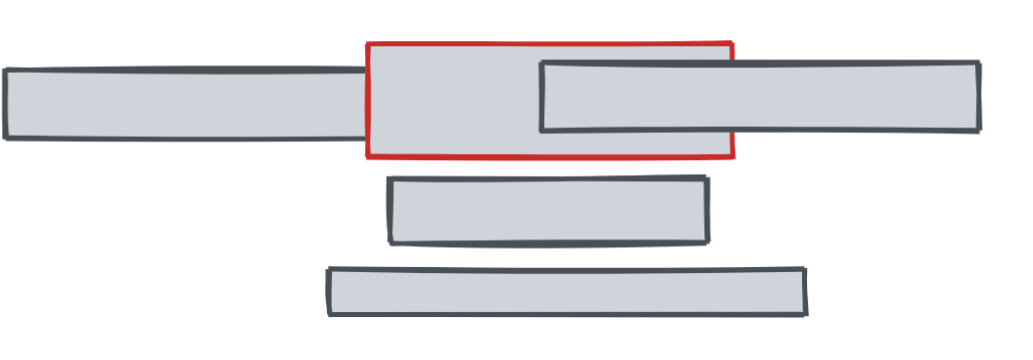
> 注意是 if 不是 else if 。 否则的话,你的判断会很多。
大家对此有何看法,欢迎给我留言,我有时间都会一一查看回答。更多算法套路可以访问我的 LeetCode 题解仓库: 。 目前已经 37K star 啦。 大家也可以关注我的公众号《力扣加加》带你啃下算法这块硬骨头。 